I have three children. Two of them are now at the age where AI sits quietly in the background of every decision they make about their future. My 17 year old is choosing a path knowing that whole categories of job may not exist by the time he is qualified to do them. That is a strange thing to watch as a parent. It is also an uncomfortable one.
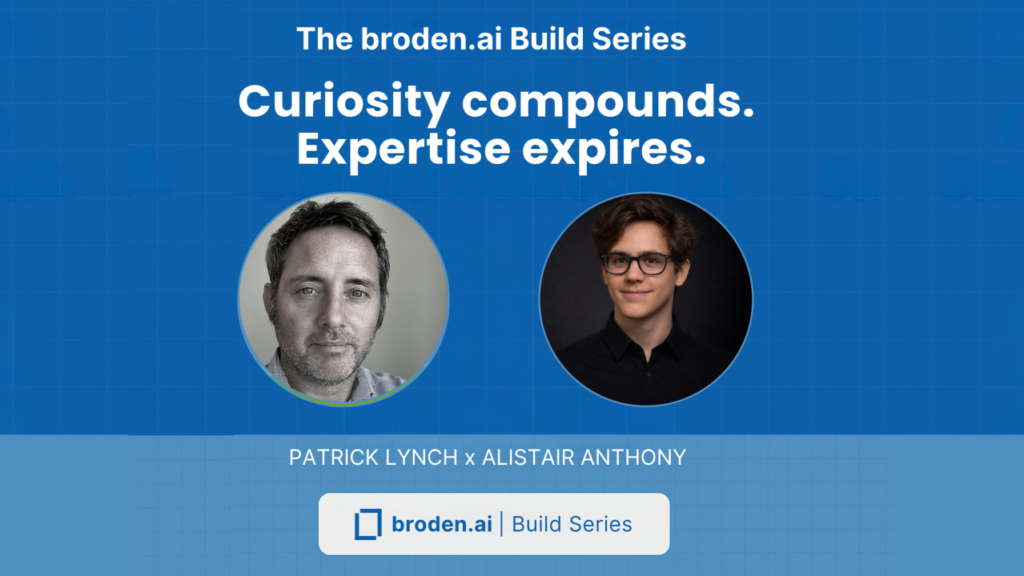
Which is why my conversation with Alistair Anthony at Dux AI stuck with me.
Alistair is in his final year at Oxford, reading Classics. He is also building production AI systems for paying clients in the UK and the US, and he taught himself to do it inside twelve months.
He is straight about where he started. This time last year, in his own words, he was “pretty rubbish” at using AI. So he went at it for hours a day, every day, until he was not. What began as a hobby is now the business.
Standing start to shipping systems companies rely on, in a year. What struck me was not the enthusiasm. It was the logic underneath it.
“The differential in risk and difficulty between trying to get a standard graduate job and trying to start my own company is probably the lowest it’s ever been.”
Worth reading twice. The same force making the graduate market harder is the one making a one person business viable. He has looked at both sides of that, concluded the risk is now roughly symmetrical, and taken the side with the upside on it.
And he is not theorising. He is already shipping:
- A cold outbound system for a US startup sitting on a database of leads nobody had ever contacted. It researches each company, writes a genuinely relevant opening line, sends in batches, and routes replies to a human.
- A LinkedIn system for a consultancy that watches the comments on their posts and drafts the reply and the follow up for approval in one click.
- Four more offers in test, including an assistant that catches enquiries arriving across SMS, email and web forms, an automated quoting agent, and a system that kills double entry between the CRM and everything else.
Then there is the part I did not expect from someone a year into this. He is moving away from selling a general AI audit towards specific, named problems. His reasoning: it is far easier to sell the fix to a problem someone already knows they have than to ask them to trust that you will go and find one.
That is not a student’s instinct. That is a commercial one.
I am not saying everyone needs to dive in and become an AI expert. Most people do not, and most people will not.
I have spent more than twenty years in marketing, a good part of it working out which new technology genuinely moved the commercial needle and which was noise. I have been on both sides of that. I have bought snake oil, and I have learned to spot it. What it teaches you is that the question is never “what can this do?” It is “what does this actually change for the business?”
AI is not another channel to bolt onto the end of the list. It changes how the work itself gets done. Which is exactly why that question cannot be answered from a pitch deck, a conference stage or somebody else’s case study. You have to go and answer it yourself.
The gap opening up now is not between people who understand AI and people who do not. It is between the people curious enough to get their hands on it and the people waiting for someone to explain it to them.
Alistair did not wait.
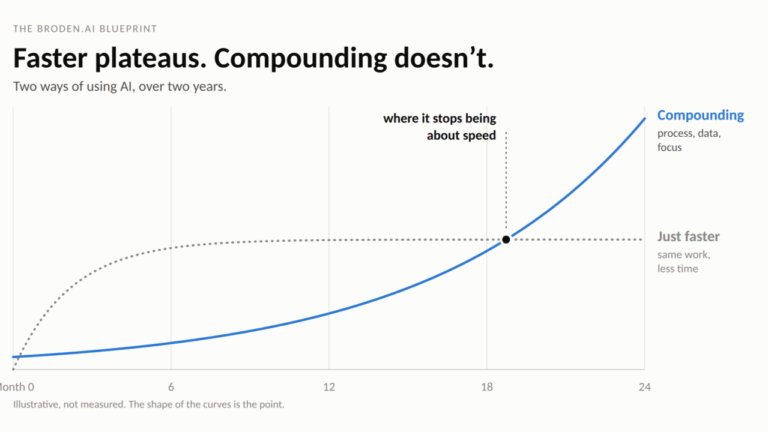
Curiosity compounds. Expertise expires.
Frequently asked questions
No. Most people won’t become AI experts and don’t need to. What matters is being curious enough to try the tools on real work, so you can judge for yourself what they actually change for your business rather than relying on pitch decks, conference talks or other people’s case studies.
Faster than most people assume. Alistair Anthony, a Classics student at Oxford, went from being, in his own words, "pretty rubbish" at using AI to building production systems for paying clients in the UK and US within twelve months, by practising for hours every day.
Ask what it actually changes for the business, not what it can do. After more than twenty years in marketing, the lesson is that plenty of new technology is noise. The way to tell the difference is to test it on your own work rather than taking someone else’s word for it.
Because it is far easier to sell the fix to a problem someone already knows they have than to ask them to trust that you will go and find one. Specific, named problems such as missed enquiries or double data entry are easier for a business to recognise and buy.