Two things are true for most UK SMEs right now, and together they’re a problem.
First, nobody senior owns marketing
In most growing businesses, marketing sits with the founder, with a capable but junior marketer, or with whoever has time that week. The SME Marketing Report found that where SMEs run marketing in-house, around two thirds of it is managed by the business owners themselves. Almost half have no formal marketing strategy.
This isn’t a criticism. Founders are good at plenty of things, and marketing has usually worked well enough to get the business this far. But “well enough” was measured in a market that has since changed.
Second, marketing is changing faster than at any point in the last twenty years
I’ve worked in marketing since the early days of the internet, and this rivals and exceeds that pace of change.
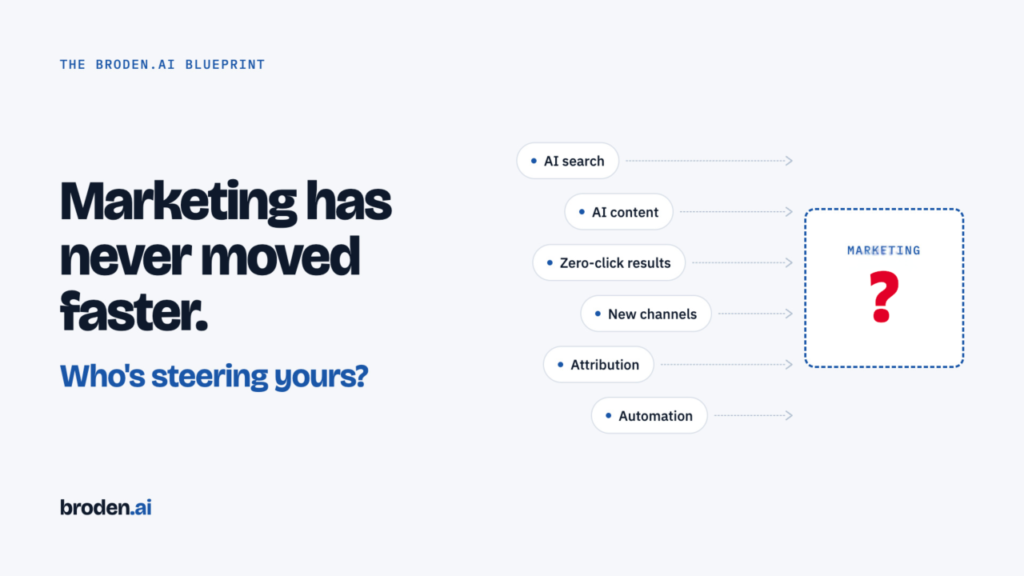
How people find businesses is shifting. In the US, 68% of Google searches now end without a click, up from 60% two years ago, and when an AI Overview appears, click-through rates fall by almost 60%. Buyers are asking ChatGPT and Google’s AI for recommendations, and the answers they get don’t always include you.
How marketing gets done is changing just as quickly. The CIM’s research with YouGov this summer found that 47% of UK marketing teams are using AI with no defined skills strategy. Two thirds of marketers say their team has an AI skills gap. And across Europe, the CIM found UK businesses lagging their neighbours on AI adoption, with a lack of expertise the most common barrier.
Those are professional marketing teams. If they’re struggling to keep up, a business where marketing is part of someone else’s job has very little chance.
The upside has never been bigger
Here’s the part that makes this worth acting on. The same change that makes marketing harder to steer has made it far cheaper to do well.
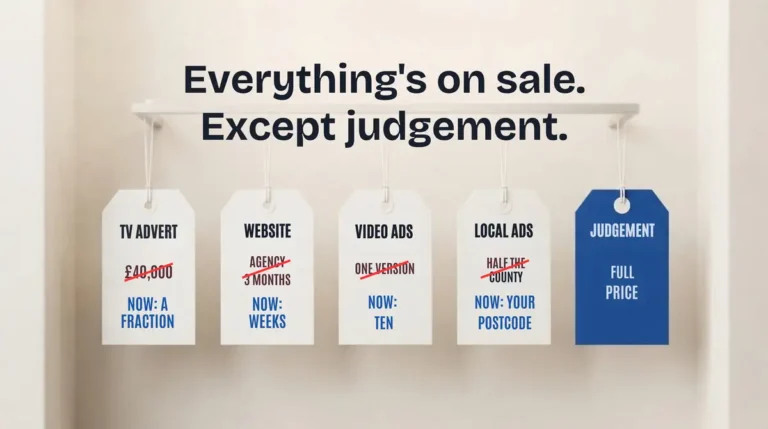
Work that needed an agency, a production budget and months of lead time can now be done in weeks, for a fraction of the cost. Campaigns that would have cost tens of thousands of pounds a few years ago can now be delivered for significantly less. Research on competitors and customers that used to be commissioned can be done in days. Content, creative, reporting and analysis that once needed a team can be produced by a small one, well directed.
For SMEs, this closes much of the gap with bigger competitors. The budget advantage that larger businesses relied on is shrinking.
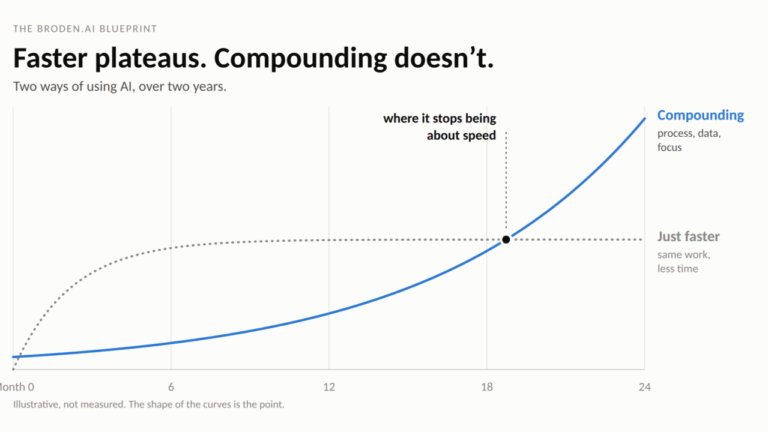
But AI doesn’t decide what’s worth doing. It makes it quicker to do the right thing and quicker to do the wrong thing. Without someone setting the direction, a cheaper campaign is just a cheaper way to waste money.
Put it all together
When nobody senior owns marketing, the business can’t tell which changes matter. It carries on with what worked before, or it reacts to whatever the latest tool or agency pitch promises.
The IPA’s latest Bellwether Report shows the pattern at a larger scale. UK marketing budgets rose again this quarter, while spending on market research was cut for the sixth quarter in a row. Businesses are spending more on marketing and less on finding out what works.
That’s how money leaks. Not through one bad decision, but through lots of reasonable ones that nobody connects back to the business objectives.
What a good marketing set-up looks like now
The answer isn’t more activity or another tool. It’s a set-up that can take in change and turn it into results. I think of it as a flywheel:
- Clear priorities, tied to what the business is trying to achieve this year
- The right mix of people, agencies and AI, each doing what they’re best at
- Measurement that shows what’s working, so budget moves towards it
- A regular review, so each quarter builds on the last
When those four are in place, change stops being a threat and becomes an advantage. A new channel or a new AI capability is something you can test, measure and adopt, or ignore, with confidence.
Where SMEs should start
Start by answering an honest question: who is actually in charge of your marketing, and do they have the experience and the time to steer it through a period like this?
If the answer is nobody, or someone who is stretched too thin, that’s the gap to close first. It doesn’t have to mean a full-time CMO. Many SMEs don’t need one, and couldn’t justify the cost. But they do need senior judgement on where the money goes and what it’s returning.
The businesses that get this right in the next couple of years will build an advantage that’s hard to catch. The ones that don’t will keep spending, and keep wondering what it’s doing.
If you’d like to talk through how your own set-up measures up, I’m always happy to have that conversation.
Frequently asked questions
Someone with the seniority and experience to set priorities, judge trade-offs and connect marketing to business objectives. In most SMEs, marketing sits with the founder, a junior marketer or whoever has time that week. The SME Marketing Report found around two thirds of in-house SME marketing is managed by business owners themselves, which leaves little time for strategy.
Because two things are changing at once. How customers find businesses is shifting, with 68% of US Google searches now ending without a click. And how marketing gets done is changing, with CIM research finding 47% of UK marketing teams using AI with no defined skills strategy. Without senior ownership, it is hard to tell which changes matter.
Yes. Work that once needed an agency, a production budget and months of lead time can now be done in weeks for a fraction of the cost. That closes much of the gap with larger competitors. But AI makes it quicker to do the wrong thing as well as the right thing, so direction matters more than before.
A flywheel with four parts: clear priorities tied to this year’s business goals, the right mix of people, agencies and AI, measurement that shows what is working so budget moves towards it, and a regular review so each quarter builds on the last. With those in place, new channels and AI tools can be tested and adopted with confidence.
Not necessarily. Many SMEs don’t need a full-time CMO and couldn’t justify the cost. What they do need is senior judgement on where the marketing budget goes and what it returns. A fractional CMO can provide that part-time, alongside the existing team and agencies.