Everyone I speak to is excited about what they can now build. A website over a weekend. An app without a developer. An AI assistant that answers customer questions. A month of content in an afternoon.
I’m one of them. This month, on top of my client work, I built:
- 32 marketing diagnostics, on a platform I built to produce them
- 2 working MVPs
- 4 proposals
- 2 websites, one with a working backend and onboarding flow
- A video editing and production process
- A 2027 marketing plan and data workflows for a client
- 3 newsletter articles and a dozen LinkedIn posts
A few years ago, that would have needed a team and a budget to match.
But none of it, on its own, is a result. A build is an output. Success is something else, and the excitement about building is making that easy to forget.
Why building feels like progress
Building gives you something to point at. A new page, a new tool, a new campaign. It’s visible, it’s finished, and it feels like momentum.
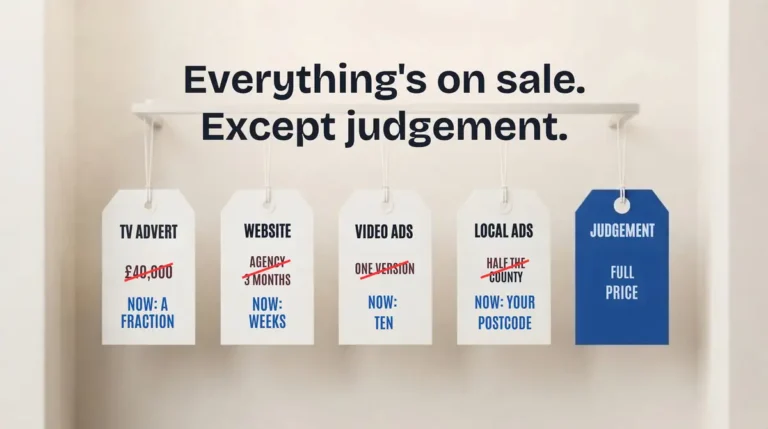
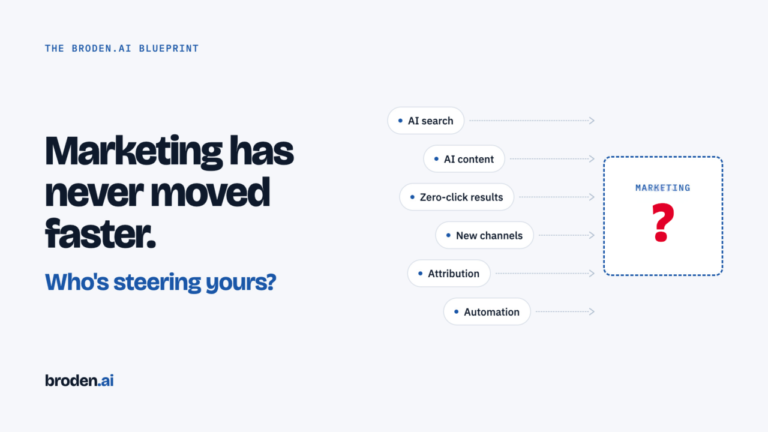
But when anyone can build almost anything, building stops being the hard part. Your competitors have the same tools, and so does your agency. The things that used to slow ideas down, cost and time, have mostly gone. So more gets built, and less of it adds up.
I see the result in almost every business I review. In 22 of the last 25 diagnostics I ran, the website, the LinkedIn company page and the founder’s profile told different stories. Nobody set out to confuse anyone. Each piece made sense to whoever built it. Together they create doubt, and doubt is where deals stall.
The tools aren’t the problem. The problem is building without a clear answer to three things: what it’s for, who it needs to line up with, and whether you’ll keep it going.
What actually delivers
The businesses getting results from AI aren’t the ones building the most. They have three things the others don’t.
Focus. One clear objective that everything is measured against. Before anything gets built, someone can say which number it should move. Without that, every idea looks worth doing, and the month fills up with work that’s slightly useful.
Alignment. Everyone pulling the same way: the team, the agencies, the freelancers and now the AI tools. AI makes it easy for one person to build alone, and that’s the silo in a new form. A tool only helps if the people around it know what it’s for and how it fits the plan.
Consistency. The same story, told everywhere a buyer looks, kept up over time. Buyers and the AI assistants they now ask both reward a business that says one clear thing repeatedly. A burst of new builds that each say something slightly different does the opposite.
None of these is new. What’s new is how much it costs to skip them. When building was slow and expensive, the effort itself forced a bit of discipline. Now nothing does, unless someone decides it should.
How that played out in my own month
My list only makes sense because of one decision I made in October: focus broden.ai on professional services firms.
That gave me the focus. The website and LinkedIn were rebuilt around it. The diagnostic exists because buyers needed a low-risk first step. The platform behind it exists so I could run it at volume. The proposals came from the conversations the diagnostics started.
Alignment was the part that needed people, not tools. The client work started from each client’s own objectives and data, agreed with their team before anything was built.
Consistency is where I nearly tripped. My own diagnostic found my LinkedIn company page still describing the business before I repositioned it. The build had moved on and the story hadn’t.
About half of the diagnostics have turned into a proper conversation. That’s the number I watch. Not how many I’ve built, but how many led somewhere.
Three questions before your next build
- Focus: which number should this move, and is it the number that matters most right now?
- Alignment: who else needs to know it exists, and what it’s for?
- Consistency: does it tell the same story as everything else a buyer will see, and will we keep it going?
If you can’t answer all three, the build can wait. Building is the easy part now. Deciding what’s worth building, and making it add up, is where the results come from.
If you’d like a second pair of eyes on your answers, a 30-minute diagnostic call is a good place to start.
Frequently asked questions
A build is an output, not a result. AI has removed most of the cost and time that used to filter ideas, so businesses now build more than ever. Without a clear objective, alignment across the team and a consistent story, those builds pull in different directions, and buyers see doubt rather than a reason to choose you.
Focus means one clear objective that every piece of work is measured against. Alignment means the team, agencies, freelancers and AI tools all pulling the same way, with everyone knowing what each piece is for. Consistency means telling the same story everywhere a buyer looks and keeping it up over time.
Buyers check several places before they get in touch: the website, the LinkedIn company page, the founder’s profile and, increasingly, an AI assistant. In 22 of 25 diagnostics broden.ai ran, those touchpoints told different stories. Each difference creates a little doubt, and doubt is where deals stall.
Ask three questions first. Which number should it move, and is that the number that matters most right now? Who else needs to know it exists and what it is for? Does it tell the same story as everything else a buyer will see, and will you keep it going? If you cannot answer all three, it can wait.
No, it makes it more important. When building was slow and expensive, the effort forced some discipline about what was worth doing. Now almost anything can be built quickly, so the cost has moved from making things to choosing them. Someone senior needs to decide what matters, what to stop and how it all adds up.