In today’s hyper-competitive digital world, marketing is often one of the largest line items on the budget for SMEs. But here’s the uncomfortable truth: much of it isn’t working. Despite the endless stream of social posts, ads, emails, and content, the return often doesn’t justify the spend.
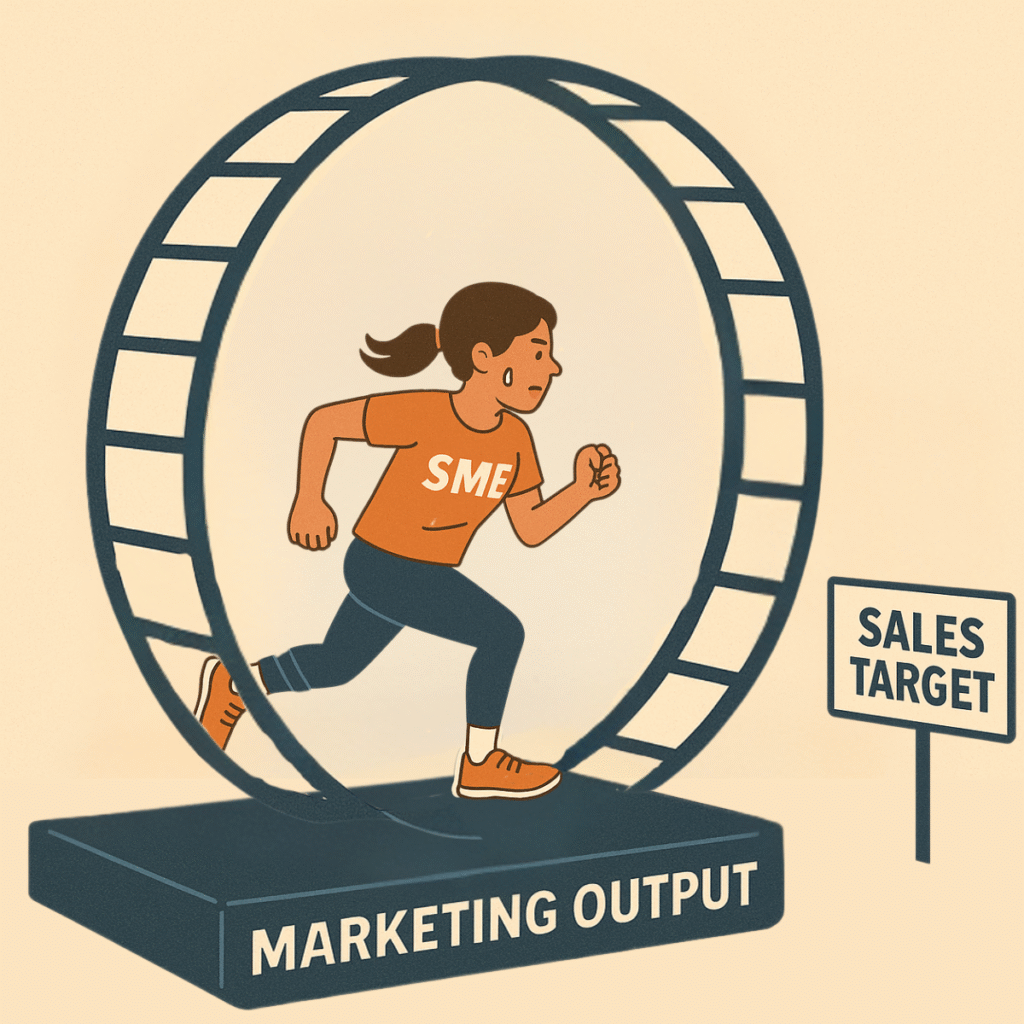
Why? Because too many businesses are confusing activity with impact.
Are You Being a Busy Fool?
It’s easy to fall into the trap of constant output — chasing engagement, tweaking ads, pumping out campaigns — without pausing to ask: what is all this actually doing for us?
SMEs are under pressure to “do marketing,” but without a clear strategy, they risk becoming busy fools. Lots of noise, little return. This inefficiency eats up time, money, and morale.
Before thinking about adding more to your stack, step back and evaluate:
What role is marketing playing in your business?
Are your efforts actually moving the needle?
Do you understand where your marketing is leaking money and attention?
Marketing Waste: Hiding in Plain Sight
Wasted spend isn’t always dramatic. It’s the silent budget killer:
CPC campaigns that bring the wrong traffic.
Email flows that hit inboxes but drive zero action.
Content that takes time to make but goes unread.
Manual tasks that could’ve been automated months ago.
Without regular review, these inefficiencies compound. A monthly audit of performance and process isn’t a luxury — it’s survival.
AI Isn’t a Magic Wand — But It Is a Scalpel
Artificial Intelligence won’t fix your strategy. But used well, it will make it sharper. AI helps SMEs move from spray and pray to precision and predictability.
It can:
Surface hidden patterns in performance.
Segment your audience with surgical accuracy.
Automate low-value tasks, freeing your team to think.
Personalise outreach at scale.
Used right, AI stops you doing “more stuff” and helps you do the right stuff.
4 Steps to Smarter AI-Driven Marketing
Start with clarity, not tools.
Don’t chase the latest AI gimmick. Ask: what’s the biggest inefficiency in our marketing? Start there.Pilot, don’t plunge.
Pick one area — content creation, customer segmentation, lead scoring — and trial AI there. Measure the impact.Build internal capability.
You don’t need to become a data scientist. But someone on your team does need to understand how to wield AI meaningfully.Adopt a test-and-learn mindset.
AI thrives on iteration. Your strategy should too. Regularly review, refine, and redeploy based on what’s working.
Efficiency Isn’t About Doing Less — It’s About Doing What Works
Smart marketing isn’t about shouting louder. It’s about listening better, targeting sharper, and spending time where it counts.
Before throwing more budget or tools at the problem, ask yourself:
-Are we clear on what’s working?
– Are we doing things just to tick a box?
– Where could AI help us work smarter, not harder?
Frequently asked questions
Marketing waste is usually quiet rather than dramatic. Common examples are pay-per-click campaigns that bring the wrong traffic, email flows that reach inboxes but drive no action, content that takes time to make but goes unread, and manual tasks that could have been automated months ago. Without regular review these compound, so a monthly audit of performance and process is essential.
Start with clarity, not tools: identify your biggest marketing inefficiency and begin there. Pilot AI in one area, such as content creation, customer segmentation or lead scoring, and measure the impact. Make sure someone on the team understands how to use AI meaningfully, and adopt a test-and-learn approach, reviewing and refining based on what works.
No. AI will not fix your strategy, but used well it makes a good one sharper. It can surface hidden patterns in performance, segment audiences precisely, automate low-value tasks and personalise outreach at scale. The goal is not more activity but the right activity, moving from spray and pray to precision and predictability.